


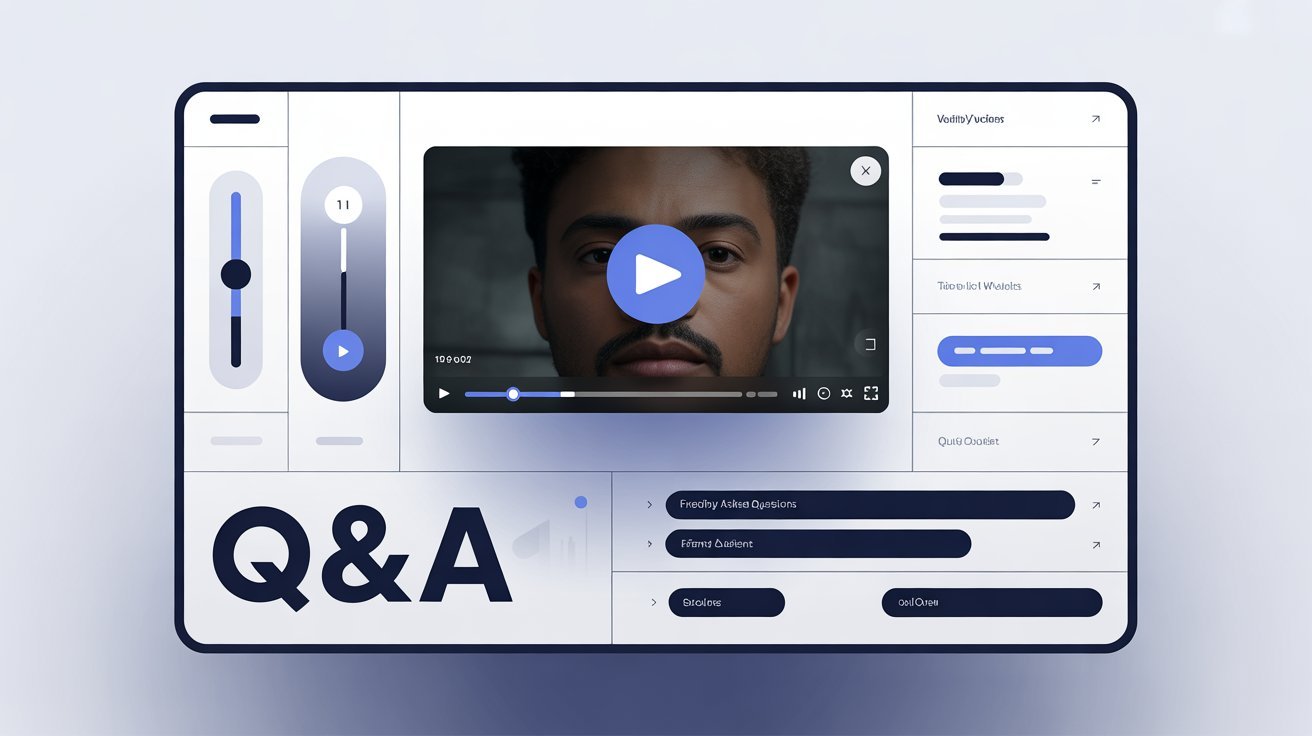

Imagine you are watching a product launch video. The presenter is knowledgeable, the graphics are slick, but a specific question pops into your mind about compatibility. Instead of pausing to search through a lengthy FAQ page or leaving a comment that may never be answered, you simply click a button directly on the video. A short, clear clip from the company’s tech lead appears instantly, addressing your exact query. This seamless integration is not the future. It is the evolving present of a format known as Video&a.
More than a simple typo or a casual abbreviation, “Video&a” represents a powerful convergence. It signifies the intentional and strategic merging of polished video content with the authentic, responsive nature of a live question and answer session. This hybrid model is rapidly moving from an innovative experiment to a core communication strategy for leaders, educators, and creators. Why? Because in a digital landscape saturated with static content, Video&a offers something precious: dynamic, two-way communication that builds understanding, trust, and community.
This article will guide you through the compelling world of Video&a. We will explore its unique advantages, its practical applications across various fields, and provide a clear roadmap for creating your own effective Video&a content. This is about learning how to turn passive viewers into active participants.
Beyond the Monologue: The Core Principles of Video&a
At its heart, Video&a addresses a fundamental flaw in traditional video communication: the monologue. A standard video, no matter how well produced, broadcasts a message outward. The audience receives it, but the line of communication often ends there. Video&a closes that loop. It transforms a one way broadcast into a dialogue, creating a structured yet flexible space for interaction.
We can break down its core principles into three key pillars:
1. The Primacy of the Question.
In Video&a, the question is not an afterthought. It is the architectural blueprint. Content is organized, structured, and often indexed around the questions it answers. This represents a significant shift from a creator-centric model (“What do I want to say?”) to an audience-centric model (“What do they need to know?”). This approach directly taps into how people seek information in the digital age, through search engines and voice assistants, by phrasing queries. By anchoring your content to real questions, you ensure immediate relevance.
2. Modular and Scalable Clarity.
A traditional long form video is a linear journey. If a viewer needs one specific piece of information, they must scrub through a timeline, hoping to find it. Video&a thinking encourages modularity. Each question is answered with a concise, focused video segment. Think of these as individual “knowledge nuggets.” This structure is inherently scalable. A single, broad topic can branch into dozens of specific Q&A segments. For the viewer, this means efficiency. They get precise answers without wading through unrelated content. For the creator, this library of modular clips becomes a reusable asset for websites, social media, and customer support portals.
3. Authenticity Through Response.
There is a perceived polish to a scripted, edited video. While professional, it can sometimes feel distant. The magic of a live Q&A lies in its raw, unscripted moments where the speaker thinks on their feet. Video&a captures the best of both worlds. The main content can be polished, while the Q&A segments can retain a slightly more informal, responsive tone. This controlled authenticity is powerful. It shows the human behind the brand, the expert behind the title, and builds a deeper layer of trust. The audience sees someone capable of handling spontaneous inquiry, not just delivering rehearsed lines.
The Transformative Benefits: Why Video&a Resonates
Adopting a Video&a framework is not about following a trend. It is about leveraging a format that delivers measurable advantages for both the creator and the audience.
For the Audience: Empowerment and Efficiency.
-
Personalized Learning Paths: Viewers are no longer passive recipients. They can navigate content based on their unique interests and knowledge gaps, creating a custom learning experience.
-
Time Respect: By providing direct access to specific answers, you show respect for your audience’s time. This greatly enhances user satisfaction and content perception.
-
Deeper Understanding: Complex topics are broken down into digestible pieces. Viewers can revisit confusing points without replaying an entire lecture, reinforcing comprehension.
For the Creator and Organization: Insight and Impact.
-
Uncovering True Audience Needs: The questions your audience asks are a goldmine of data. They reveal pain points, misconceptions, and interests that you may not have anticipated. This informs future content, product development, and service improvements.
-
Supercharged SEO and Discoverability: By structuring content around questions, you naturally integrate the long tail keywords and phrases people actually use when searching. Each Q&A segment becomes a potential landing page for organic search traffic. Search engines favor content that directly and clearly answers user queries.
-
Building Community and Trust: This format fosters a sense of inclusion. When people see their questions being answered thoughtfully, they feel heard and valued. This cultivates loyalty and transforms a scattered audience into an engaged community.
-
Extending Content Lifespan and Utility: A one hour webinar has a limited shelf life. When that webinar is sliced into twenty focused Video&a clips addressing specific problems, each piece continues to attract views and provide value for months or years. You maximize the return on your content creation effort.
Video&a in Action: Real World Applications
The versatility of Video&a is one of its greatest strengths. It is not confined to a single industry or purpose.
In Corporate Communication and Marketing:
-
Onboarding and Training: New employees can access a video library answering common questions about processes, software, and culture, reducing the burden on HR and managers.
-
Product Marketing: Instead of a single features video, create a dynamic hub where prospects can click on questions like, “How do I integrate with X?” or “What is your data security policy?” to see dedicated answer clips from product managers.
-
Executive Updates: A CEO’s quarterly update can be accompanied by a Video&a segment where they address pre submitted employee questions, boosting transparency and morale.
In Education and E Learning:
-
Flipped Classrooms: Instructors can assign foundational video lectures. Class time is then reserved for a dynamic Video&a session, diving deeper into student submitted questions, enabling active learning.
-
Course Supplements: A math tutor can create a bank of short videos answering the most challenging problems from a textbook chapter. Students struggling with problem 15 can find help immediately.
-
Student FAQs: University departments can use Video&a to answer repetitive but important questions about admissions, financial aid, and campus life, providing a more engaging and reassuring resource than text.
For Experts, Coaches, and Creators:
-
Demonstrating Authority: A financial coach can produce a series addressing specific client fears. “How do I start investing with $100?” or “Should I pay off debt or save first?” Each video solidifies their expertise.
-
Scaling One on One Advice: Life coaches and consultants can address common client hurdles in Video&a format, providing immense value to their broader audience while showcasing their coaching style.
-
Enhancing Online Courses: Premium courses can include “Office Hours” Video&a modules, adding significant value and mimicking the interactive feedback of a live classroom.
Crafting Your Compelling Video&a Content: A Step by Step Guide
Ready to move from theory to practice? Creating effective Video&a content requires a shift in process, not just in tools.
Foundation and Collection
-
Identify Your Core Topic: Start with a broad subject where your audience has clear knowledge gaps (e.g., “Getting Started with Content Marketing,” “Understanding Blockchain”).
-
Gather Questions Proactively: Do not guess what to answer. Use social media polls, email surveys, customer support logs, and comments on previous content to collect real questions. If launching something new, predict likely questions based on your expertise.
Production and Structure
-
Create a Core Overview Video (Optional but Recommended): For broader topics, begin with a concise, well produced 3 5 minute video that outlines the landscape. This sets the stage.
-
Film the Answers Modularly: For each distinct question, film a separate, focused answer. Aim for clarity and conciseness, typically 30 seconds to 2 minutes. Use a consistent but relaxed setting. You can film answers to dozens of questions in a single recording session.
-
Prioritize Quality in Essentials: Good, clear audio is non negotiable. Use a decent microphone. Ensure your lighting is flattering and consistent. A clean, professional background maintains focus.
Assembly and Technology
-
Choose Your Platform: You have options based on your technical comfort and goals.
-
Interactive Video Platforms: Tools like Vimeo Interactive, HapYak, or Wirewax allow you to embed clickable buttons, chapters, and branching paths directly into your video player.
-
Webpage Integration: You can host your main video on a standard player and use simple webpage coding to create a chapter list or a grid of thumbnails that link to specific timestamps.
-
Dedicated Microsites: For large projects, create a simple website where each question is a page featuring its answer video, optimized for search engines.
-
-
Make Navigation Intuitive: However you host it, the user interface must be simple. A clear list of questions, a clickable timeline, or an on screen “Choose Your Path” menu are all effective. The viewer should never feel lost.
Promotion and Iteration
-
Launch and Promote Individual Clips: Do not just share the main hub. Extract each Q&A clip and share it natively on social media, YouTube Shorts, or TikTok, linking back to the full resource. This drives traffic.
-
Analyze and Evolve: Use analytics to see which questions are viewed most. Monitor comments and channels for new questions. Periodically add new answer clips to your Video&a hub, keeping it alive and growing. Announce when you add new answers to bring your audience back.
The Human Connection in a Digital Format
In conclusion, Video&a represents more than a technical format shift. It signifies a philosophical return to dialogue in an age of digital monologue. It is an acknowledgment that true communication is a circuit, not a cable. It requires both transmission and reception.
By embracing Video&a, you commit to listening as intently as you speak. You choose to build knowledge systems that are adaptive, not rigid. You decide to see your audience not as metrics on a dashboard, but as individuals with unique voices and curiosities. In the elegant dance between the polished message and the spontaneous response, you find a powerful tool for education, marketing, and genuine human connection. The question is no longer whether to adopt this approach, but rather, what is the first question you will answer?





Leave a Reply