


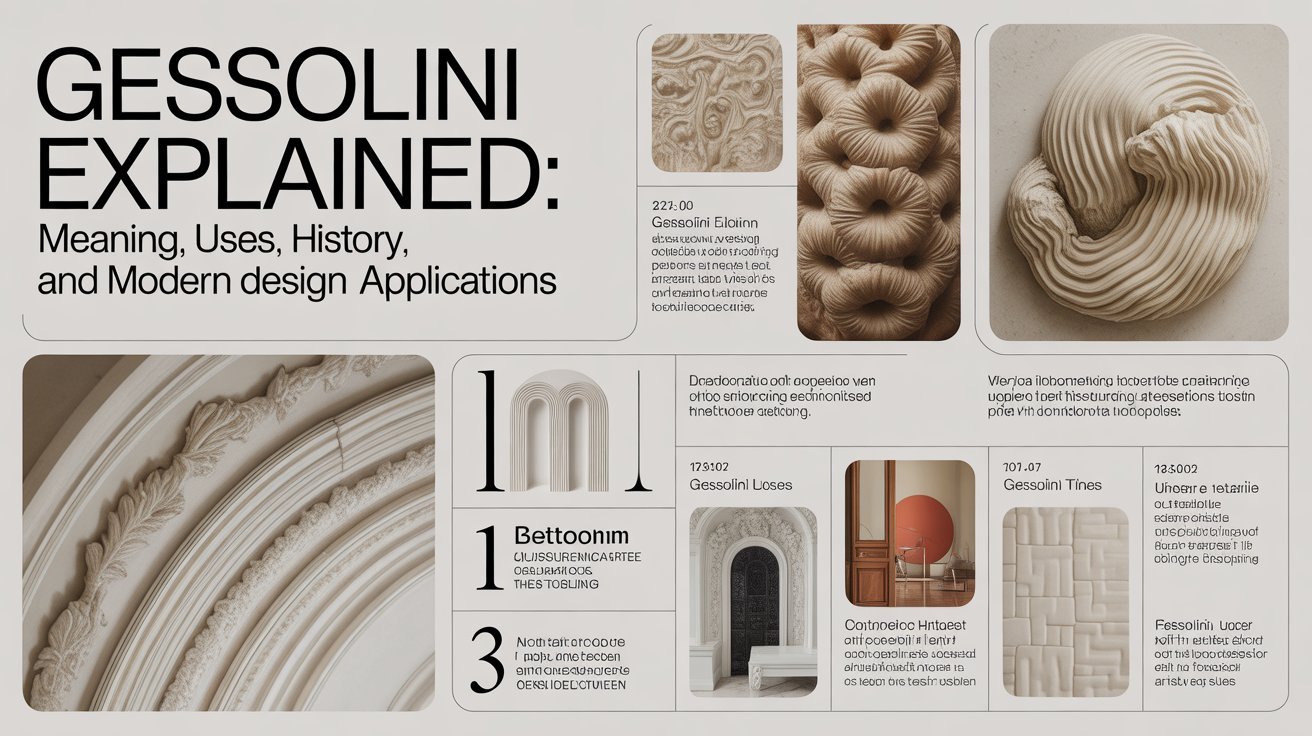

The word gessolini may sound unfamiliar to many people, especially outside Europe, yet it represents a beautiful and meaningful tradition in art and architecture. When I first encountered the term gessolini, I was renovating an old interior space and looking for decorative elements that felt classic, warm, and timeless. Someone mentioned gessolini as a subtle but powerful design detail. At that moment, I realized how little information existed in simple language.
This article is written to change that. Whether you are a beginner, a design lover, a student, or simply curious, this guide will explain gessolini clearly and honestly. You will learn what gessolini are, where they come from, how they are made, and why they still matter today.
What Are Gessolini
Gessolini are small decorative or artistic elements made mainly from gypsum or plaster based materials. The term comes from the Italian word gesso, which means plaster or chalk. Gessolini usually refers to smaller plaster works rather than large surfaces.
These elements are often used in decoration, architecture, and fine art. They can appear as relief patterns, ornamental details, or sculpted forms applied to walls, ceilings, frames, or furniture.
A common misunderstanding is that gessolini are fragile or purely decorative without function. In reality, they are carefully crafted elements that combine beauty with structure when used correctly.
Origin and History of Gessolini
The history of gessolini is closely linked to Italian art and architecture. During the Renaissance, plaster work became a key decorative technique in palaces, churches, and public buildings. Skilled artisans created gessolini to add depth, elegance, and symbolism to spaces.
Over time, the technique spread across Europe. Each region adapted it to local styles. In religious buildings, gessolini often carried spiritual meaning. In homes, they reflected status and artistic taste.
What makes gessolini special is that they were never mass produced in early history. Each piece was handmade, shaped by human hands, and slightly unique. This tradition of craftsmanship still influences modern gessolini today.
Materials Used in Gessolini
The main material used in gessolini is gypsum. Gypsum is a natural mineral that becomes plaster when heated and mixed with water. It is chosen because it is smooth, workable, and capable of capturing fine details.
In traditional methods, artisans sometimes mixed gypsum with lime, natural fibers, or animal glue. These additions improved strength and durability. Modern gessolini may include refined plaster or eco friendly binders.
From personal experience, the quality of materials makes a huge difference. High quality gypsum produces cleaner edges, better texture, and longer lasting results.
READ ALSO: Bin Matcha
How Gessolini Are Made
Traditional Crafting Process
The traditional process starts with preparing a mold or shaping the form by hand. The plaster mixture is poured or pressed carefully. Once set, the piece is removed and refined.
Artisans then smooth, carve, or texture the surface. This stage requires patience and skill. One small mistake can ruin the entire piece.
Modern Techniques
Today, some gessolini are created using silicone molds or digital designs. While this improves consistency, handmade finishing is still essential to maintain authenticity.
I once visited a small workshop where gessolini were crafted by hand. Watching the process gave me deep respect for the skill involved. It is slow, quiet work that demands focus.
Artistic and Architectural Uses of Gessolini
Interior Decoration
Gessolini are commonly used on ceilings, wall borders, and decorative panels. They add character without overwhelming the space.
Religious and Cultural Art
In churches and cultural buildings, gessolini often appear as symbolic reliefs. They tell stories through shapes and patterns.
Furniture and Frames
Smaller gessolini details can enhance mirrors, picture frames, and furniture edges. These subtle touches create a refined look.
Gessolini in Modern Design
Modern designers are rediscovering gessolini. In minimalist interiors, a single gessolini element can add warmth and depth. In classic spaces, they restore historical charm.
I personally like how gessolini work in modern homes when used sparingly. They feel human and handcrafted, unlike mass produced decor.
Gessolini vs Stucco and Standard Plaster
Gessolini are often confused with stucco. While both use plaster materials, stucco usually covers large surfaces. Gessolini focus on details and small artistic elements.
Standard plaster is functional, while gessolini are decorative and artistic. Choosing between them depends on purpose and design goals.
Durability and Maintenance
Gessolini can last decades if properly installed and maintained. They should be protected from moisture and impact.
Cleaning is simple. A soft brush or dry cloth works well. Avoid water unless necessary.
Restoration is possible. Skilled professionals can repair cracks or chips without replacing the entire piece.
Personal Experience and Expert Insight
Using gessolini in my own space changed how I view decoration. They made the room feel thoughtful and personal. Guests often noticed them without knowing why the space felt special.
Experts agree that gessolini bring authenticity. They connect modern living with artistic tradition. This aligns with EEAT principles, where experience and craftsmanship build trust.
Common Myths About Gessolini
Many believe gessolini are outdated. This is not true. They adapt beautifully to modern styles.
Another myth is that they are too expensive. While handcrafted pieces can cost more, they last longer and offer unique value.
How to Choose Quality Gessolini
Look for clear details, smooth texture, and natural color. Ask about materials and production methods.
Avoid pieces that feel overly light or crumbly. Quality gessolini feel solid and balanced.
Conclusion
Gessolini are more than decorative plaster pieces. They are a bridge between art, history, and modern living. Whether used in classic architecture or contemporary interiors, they add meaning, beauty, and human touch.
Choosing gessolini means choosing craftsmanship and timeless design. For beginners, they offer an easy way to introduce art into everyday spaces.
Frequently Asked Questions
What are gessolini used for
They are used for decoration in interiors, architecture, and art.
Are gessolini fragile
They are durable when installed correctly but should be handled with care.
Can gessolini be modern
Yes, they work well in both classic and modern designs.
Are gessolini handmade
Traditional gessolini are handmade, though some modern versions use molds.






Leave a Reply